

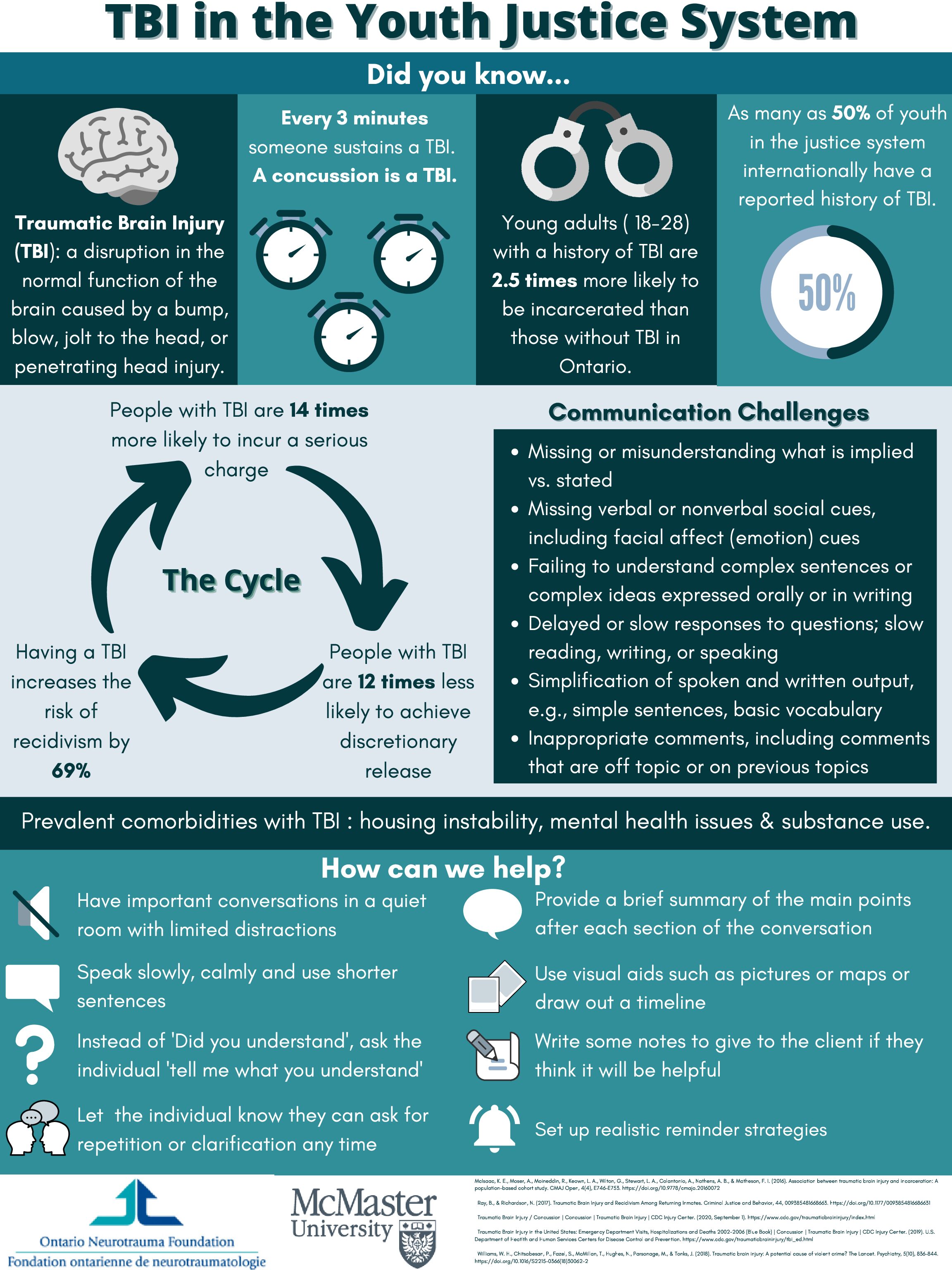
 Infographic
 PowerPoint
 Brain Injury Intersection with Other Systems of Support
Below are just some of many intersections between brain injury and other diagnoses. Screening for lifetime history of Brain Injury is recommended as a regular part of the intake process because of the pervasiveness of Brain Injury in the following groups:
Mental Health
Brain injury can create mental health issues, as well as worsen pre-existing ones. They can make coping harder. Six months to 1 year following an injury: one third will experience a mental health problem – that number will grow over time. People with BI have a 2 – 4 times increased risk of attempting or having death by suicide. As high as 75% of people seeking mental health and substance use treatment also have a brain injury.
Substance Use Disorder
People with TBI are 10 times more likely to die of accidental overdose. Approximately HALF of people receiving substance abuse treatment have at least one brain injury. 25% of people enter brain injury rehabilitation as a result of drugs or alcohol. Those with childhood TBI are more likely to abuse drugs & alcohol as adults. For every overdose death, there are approximately fifty overdose survivors, 90% of whom become impaired because of insufficient oxygen to the brain. As high as 75% of people seeking mental health and substance use treatment also have a brain injury.
Domestic Violence
An estimated 20 million women each year could have a TBI caused by DV. Survivors of DV with a TBI are likely to have trouble with attention, concentration, memory, executive functioning and processing information. These changes make it harder to assess danger, make decisions related to safety and adapt to living in a shelter.
Justice System
Within 5 years post injury, nearly 1/3 report some involvement with criminal justice. Of those in the Juvenile Justice System, 41% have had a TBI. They are likely to sustain more injuries as they age. With TBI, they are at a 69% higher risk of recidivism. In the adult Justice System, 50-80% have had a TBI. People with TBI are 12 times less likely to achieve discretionary release. Close to 100% of women in the justice system have a history of TBI.
Homelessness
TBI is both a cause & consequence of homelessness. Over half of those who are homeless or are in an insecure living situation have a TBI (25% were moderate to severe brain injuries – 10 times higher than the general population.) They have poorer general health and functioning than people who are homeless without brain injury.
Chronic Pain
Pain is the most common chronic medical condition reported by people with TBI. Over half develop chronic pain. Common problems following brain injury, like poor judgment, memory changes, and impulsivity make it harder to self-regulate substance use & make overdose 11 times more likely.
Child Abuse
30 – 60% of perpetrators of domestic violence also abuse children in the household. Abusive Head Trauma includes Shaken Baby Syndrome.
ACEs/Trauma
Sustaining a brain injury in childhood or living with someone with a brain injury may be experienced as an ACE. Some ACEs can cause brain injury.
Key TBI Resources
Get educational resources for professionals and all ages served.
Brain Links’ Service Provider Toolkit
Tools for developing plans and services; mental health information and factsheets; domestic violence; returning to school and work; residential resources; family and caregiver resources; social media; professional development; programs and resources.
Brain Links’ Survivor, Family and Caregiver Toolkit
Essential resources; signs, symptoms and factsheets; mental health; domestic violence; behavior; returning to school and work; family and caregiver resources; financial and residential resources; Spanish resources, social media.
When Concussion Symptoms Are Not Going Away
The key resource to hand out to persons served and families to help them understand potential problems following concussion and options for what to do. Age-based. (Also available in the toolkits.)
Key TBI Resources for Specific Systems of Support


 Link
Link 
