
Tennessee Brighter Futures Collaborative
 Brain Links’ Tennessee Brighter Futures (TBF) Collaborative is a statewide group of agencies and organizations that help people who may have multiple diagnoses or needs. TBF is organized and facilitated by Brain Links through a contract from the TN Department of Health TBI Program.
TBF helps systems of support to be prepared to serve people with co-occurring conditions.

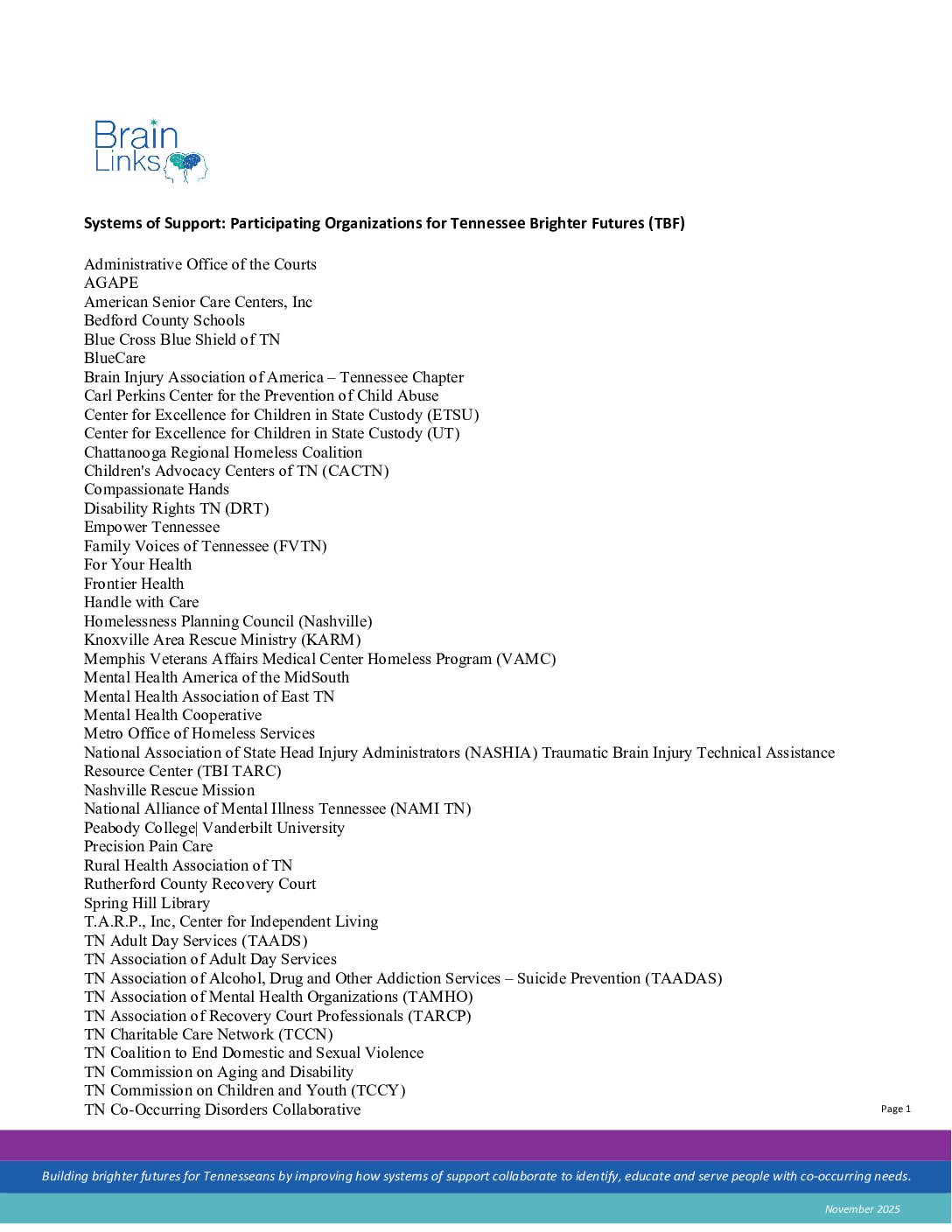
The purpose of TBF is to share expert information and build upon learning from each system of support’s experience to strengthen how we can best:
SCREEN | SUPPORT | EDUCATE
A Guide to Implementing Brain Injury-Informed Best Practice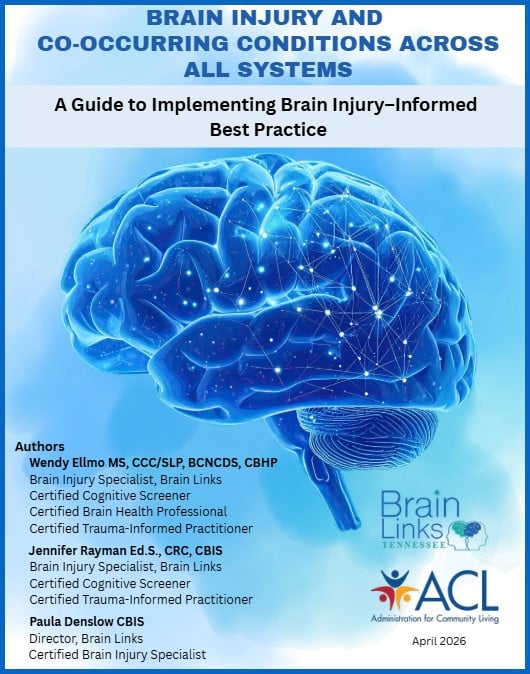 Brain injury is a widespread—and often unrecognized—factor impacting individuals across social services, healthcare, education, housing, and justice systems.
Why Brain Injury Must Be Included
It was designed to be used:
-
to activate an “aha” moment to highlight the need of including brain injury into your system
-
as a reference to outline action steps to begin including brain injury screening, education and accommodations
-
access additional free tools from Brain Links that fit your population: Substance Use, Mental Health, Criminal Legal System and more.
Brain Injury & Co-Occurring Conditions Infographic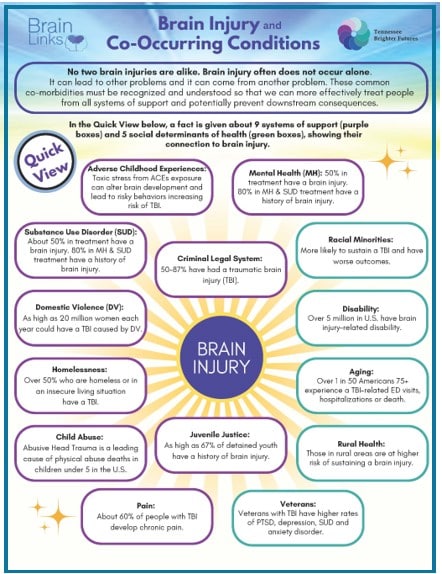 NO TWO BRAIN INJURIES ARE ALIKE.
BRAIN INJURY OFTEN DOES NOT OCCUR ALONE.
These common co-morbidities must be recognized and understood so that we can more effectively treat people from all systems of support and potentially prevent downstream consequences.
Brain Injury is BIGGER Than You Think!
This short, engaging video reveals How brain injury affects millions of people and why awareness matters across every system of support.
Adverse Childhood Experiences
Substance Use Disorder
Mental Health/Suicide Prevention
Homelessness
Social Determinants of Health
 Document
 Infographic
  Link
Link 

Brain Links is supported by the Administration for Community Living (ACL) of the U.S. Department of Health and Human Services under Grant No. 90TBSG0051-01-00 and in part by the TN Department of Health, Traumatic Brain Injury Program.